Canister Spray Adhesives in Fiberglass Manufacturing
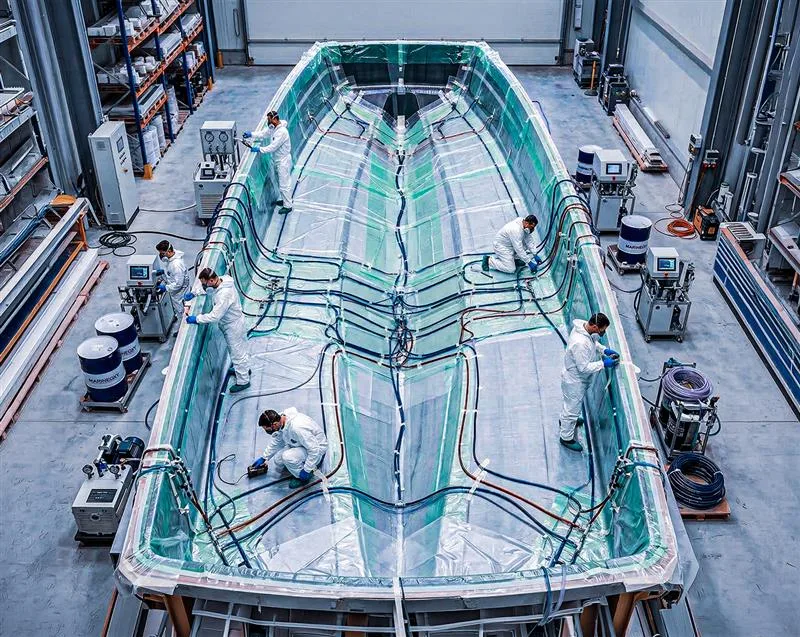
Canister Spray Adhesives in Fiberglass Manufacturing
Precision is at the core of composite manufacturing.
Before resin is ever introduced into a mold, reinforcement materials must be carefully positioned and stabilized. Fiberglass matting, woven fabrics, and structural reinforcements all need to remain exactly where they are placed throughout the layup process.
This is where canister spray adhesives become essential.
While structural adhesives ultimately carry load in the finished composite, spray adhesives serve a different—but equally important—role: they hold materials in place during fabrication so the final laminate performs as intended.
The Role of Adhesives in Composite Layup
In fiberglass manufacturing, reinforcement materials such as:
- Fiberglass mat
- Woven roving
- Carbon or hybrid fabrics
- Core materials
are layered into molds before resin infusion begins.
During processes like vacuum infusion, Resin Transfer Molding (RTM), or Light RTM (LRTM), maintaining alignment is critical. Materials must stay flat, properly oriented, and free of wrinkles.
Without stabilization, movement can occur during:
- Mold closure
- Vacuum pressure
- Resin flow
- Handling throughout layup
Even slight shifts can lead to:
- Fiber misalignment
- Inconsistent resin distribution
- Air entrapment
- Reduced structural performance
Canister spray adhesives address this by temporarily bonding reinforcement layers during assembly.
How Canister Spray Adhesives Function
Spray adhesives are applied as a fine, controlled mist that lightly secures reinforcement materials during layup.
The process typically follows three steps:
- The adhesive is sprayed and allowed to flash off
- It becomes tacky to the touch
- Materials are placed and held securely in position
Unlike permanent bonding systems, these adhesives are designed to integrate into the resin during curing rather than remain as a separate layer.
This allows them to stabilize the layup without negatively affecting the structural integrity of the finished composite.
Compatibility with Resin Systems
For spray adhesives to perform effectively in composite applications, they must be compatible with the resin system used.
High-performance formulations are engineered to work with:
- Vinyl ester resins
- Polyester resins
- Styrene-based systems
This compatibility ensures the adhesive blends into the polymer matrix during cure, avoiding contamination or weakening of the laminate.
Key Advantages of Canister Spray Adhesives
Modern composite production requires consistency, efficiency, and repeatability. Canister spray systems offer several advantages compared to traditional adhesive formats:
Consistent Application
A controlled mist spray allows for even adhesive distribution across reinforcement layers.
Faster Layup Process
Materials remain in place, reducing repositioning and improving workflow speed.
Reduced Fabric Distortion
Light adhesive coverage stabilizes fabrics without oversaturating them.
Cleaner Lamination
Because the adhesive integrates into the resin system, it does not introduce contamination during curing.
Improved Structural Quality
Stabilized materials help prevent resin-rich areas and voids that can compromise performance.
Product Spotlight: ForzaBOND® MC739
ForzaBOND® MC739 is a mist spray adhesive designed specifically for composite layup and infusion processes.
It is formulated to temporarily secure reinforcement materials while remaining fully compatible with commonly used resin systems in fiberglass manufacturing.
Key features include:
- High tack for effective material stabilization
- Compatibility with vinyl ester, polyester, and styrene-based resins
- Designed to integrate into the polymer matrix during cure
- Does not contaminate composite laminates
- Controlled mist spray pattern for precision application
- Fast dry time (approximately 1–4 minutes depending on conditions)
MC739 is commonly used to stabilize:
- Fiberglass fabric layers
- Reinforcement matting
- Core materials
across RTM, LRTM, and infusion molding processes.
Improving Efficiency in Composite Production
In addition to improving part quality, spray adhesives play a key role in production efficiency.
They help manufacturers:
- Minimize material movement during layup
- Reduce the need for repositioning
- Improve laminate consistency
- Accelerate multi-layer assembly processes
The result is greater repeatability, stronger composite structures, and more streamlined manufacturing operations.
Final Thoughts
The performance of a composite structure is determined long before curing begins.
While spray adhesives do not contribute structural strength directly, they are critical to ensuring materials are properly aligned, stabilized, and integrated into the final laminate.
For manufacturers working with infusion or RTM processes, selecting the right adhesive system can significantly improve both product quality and production efficiency.
At Forza, we work closely with composite manufacturers to identify adhesive solutions that align with their materials, processes, and performance requirements.
If you’re looking to improve your composite layup process, it may be time to take a closer look at your stabilization approach.
Recent Posts

Need Expert Advice
Our engineering team is ready to help you find the perfect adhesive solution for your application.
Contact an EngineerRecent News & Articles

Elevate Your Performance

Join Our Newsletter
Early access to new product launches and innovations
Exclusive industry insights and technical solutions
Expert tips and best practices for your applications
Follow Our LinkedIn
Stay informed with the latest industry insights & trends
Discover our latest product launches and innovations
Get expert tips and best practices for your applications