Adhesives and Sealants for Tilt-Up Concrete
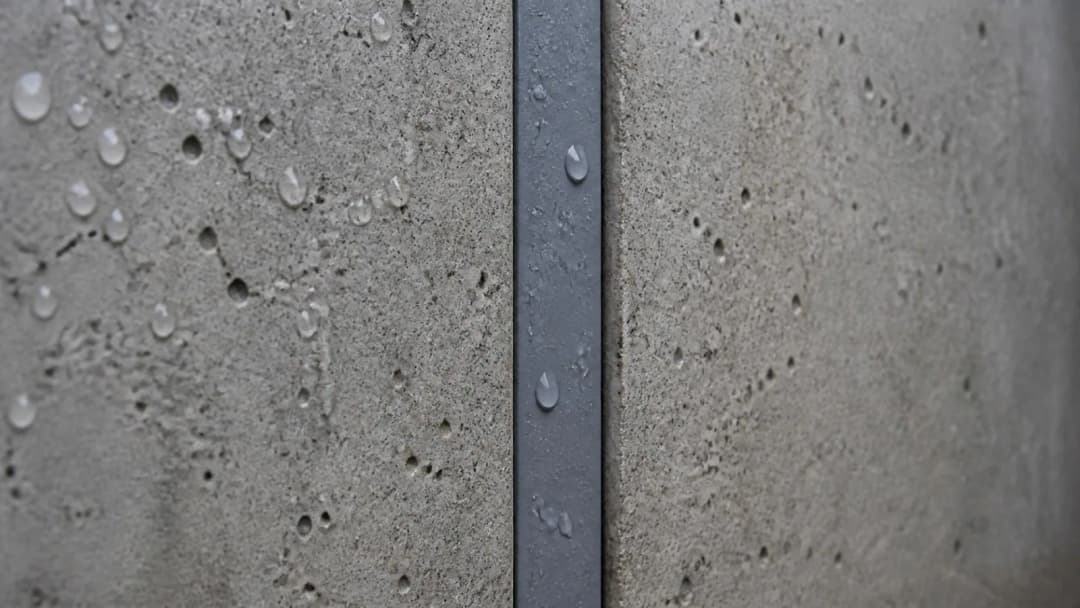
Tilt-up is a sequence, and the chemistry follows it. Reveals and rustication strips get bonded to the casting slab. Foam edge forms get held in place. Panels get cast, lifted and set. Then the joints between them get sealed, and everything that overspray touched gets cleaned off.
Each of those steps asks for something different, and the product that bonds a reveal to a casting bed has almost nothing in common with the one that seals a control joint on the erected panel.
Forza carries seven products for this sequence. This guide covers which one belongs at which step, what the published cure times are, and how to work out how much material a job needs.
Key Takeaways
- Tilt-up needs different chemistry at the casting bed than at the erected joint. One product does not cover the sequence.
- TU-OS45 seals expansion and control joints, and its product page states it is compatible with most concrete bondbreakers.
- TU603 and TU615 handle the casting-bed work: reveals, chamfers, foam edge forms, wood and plastic.
- Both sealants reach the majority of their strength within 24 hours, with full cure taking several days.
- Forza has been a member of the Tilt-Up Concrete Association since September 2025.
The Casting Bed: Bonding to the Slab
Before a panel is cast, the formwork that shapes it has to be held to the casting slab. Reveals, rustication strips, chamfers, form brackets and foam edge forms all need to stay exactly where they were placed while concrete is poured against them, and then release cleanly afterwards.
ForzaBOND TU603 is the spray contact adhesive for this. It bonds reveals, chamfers, foam edge forms, wood and plastic to casting beds, and is specified for precast, tilt-up, modular and on-site use.
ForzaBOND TU615 is a foam board pressure sensitive spray adhesive, which is the one to reach for when the material being held is foam rather than timber or plastic.
ForzaSEAL TU-OA40 is an all-weather adhesive designed for performance in both vertical and horizontal tilt-up applications. The vertical capability is the useful part, because bonding to a panel that is already standing is a different problem from bonding to one lying flat.
The Joint: Sealing the Erected Panel
Once panels are set, the joints between them have to accommodate movement without losing adhesion, in a location that is exposed to weather for the life of the building.
TU-OS45, low modulus sealant
ForzaSEAL TU-OS45 is the joint sealant. Its product page specifies it for sealing expansion and control joints in tilt-up and precast panels, floors and walls, and for bonding reveals, rustication strips, form brackets, wood or PVC to the casting slab. It also states that it is compatible with most concrete bondbreakers.
That last point matters, because a bondbreaker is applied to the casting slab specifically so the panel releases from it, and residue carried onto a joint face can interfere with a sealant adhering there afterwards. Note what the product page does and does not say: it states compatibility with most concrete bondbreakers. It makes no claim about how often bondbreaker residue causes sealant failures, and Forza publishes no figure of that kind, so none is given here.
Cure behavior: skin time under 60 minutes, the majority of strength developed within 24 hours, and a minimum overnight cure before the joint should be relied upon. Full cure takes several days and accelerates above 150°F.
TU-OS50, self-leveling sealant
ForzaSEAL TU-OS50 is the self-leveling option, which is what a horizontal joint wants. Skin time is 41 minutes, it is tack-free within the hour, strong within 24 hours, and follows the same several-day full cure pattern that accelerates above 150°F.
TU-800, sealing tape
ForzaTAPE TU-800 is an acrylic tilt-up sealing tape, for the joints where a tape is a better answer than a gun-applied sealant.
Working Out How Much You Need
Sealant coverage is bead geometry, and bead geometry is arithmetic rather than chemistry. The figures below are standard yield and apply the same way to both TU-OS45 and TU-OS50.
Per fluid ounce of material:
| Bead width | Yield per ounce |
|---|---|
| 1/8 inch | 12.2 ft |
| 1/4 inch | 3.06 ft |
| 3/8 inch | 1.36 ft |
| 1/2 inch | 9.2 in |
| 5/8 inch | 5.88 in |
| 3/4 inch | 4.08 in |
The drop from a quarter inch to a half inch is the one that catches people out. Doubling the bead width does not halve the yield, it cuts it to roughly a quarter, because the bead is filling area rather than length.
Cleaning Up
ForzaBOND TU-FS100 is the tilt-up adhesive remover. It removes overspray, tape and caulk residue, and cleans tools, hoses and equipment.
This is not an afterthought on a tilt-up job. Spray contact adhesive at the casting bed produces overspray, and overspray on a panel face that will be exposed is a finish problem better dealt with at the casting bed than after the panel is standing.
A Note on Movement
Tilt-up joint sealants are often specified against a movement class, and it is worth being straight about what Forza publishes and what it does not.
Neither TU-OS45 nor TU-OS50 carries a formal movement capability rating of the kind you would see expressed as an ASTM C920 class. The related figure that is published is elongation at break: 360 percent for TU-OS45 and 150 percent for TU-OS50.
Those are not the same thing. Elongation at break is a tensile test result. A movement capability class describes cyclic joint movement the sealant is rated to accommodate over time. If your specification calls for a movement class, ask us rather than reading one across from the elongation figure.
Choosing Between Them
- Reveals, chamfers, wood and plastic to the casting bed: ForzaBOND TU603
- Foam edge forms and foam board: ForzaBOND TU615
- Vertical and horizontal bonding on erected panels, all weather: ForzaSEAL TU-OA40
- Expansion and control joints, vertical: ForzaSEAL TU-OS45
- Horizontal and floor joints, self-leveling: ForzaSEAL TU-OS50
- Taped joints: ForzaTAPE TU-800
- Overspray, residue, tool and equipment cleaning: ForzaBOND TU-FS100
TU-800 and TU-FS100 are packaged to order rather than held as shelf stock, so build a little lead time into the schedule for those two.
Talk With a Construction Specialist
Forza has been a member of the Tilt-Up Concrete Association since September 2025, and carries the range above for the sequence described here.
Tell us the step you are at, the substrate, and whether the joint is vertical or horizontal, and we will tell you which product fits.
FAQs
What adhesive is best for tilt-up concrete panels?
It depends on where in the sequence you are. At the casting bed, bonding reveals, chamfers and forms to the slab, a spray contact adhesive such as ForzaBOND TU603 is the answer, or TU615 where the material is foam. On erected panels, ForzaSEAL TU-OA40 is an all-weather adhesive rated for both vertical and horizontal work.
What sealant is best for tilt-up construction joints?
For vertical expansion and control joints, a low modulus sealant such as ForzaSEAL TU-OS45, which is specified for tilt-up and precast panels, floors and walls. For horizontal and floor joints, the self-leveling ForzaSEAL TU-OS50. The difference that matters is whether the joint is vertical, where you need the sealant to stay where it is put, or horizontal, where you want it to level itself.
Will a sealant stick over concrete bondbreaker?
Bondbreaker residue is a recognized risk to sealant adhesion, because bondbreaker is applied specifically so that things release from the slab. ForzaSEAL TU-OS45's product page states it is compatible with most concrete bondbreakers. Forza does not publish a list of which ones, and "most" is not "all," so if you know which bondbreaker is on the job, tell us and we will confirm compatibility for that product rather than leaving it to the general statement.
How long before a tilt-up joint sealant can be relied on?
Both products develop the majority of their strength within 24 hours. TU-OS45 skins in under an hour and wants a minimum overnight cure. TU-OS50 skins at around 41 minutes and is tack-free within the hour. Full cure takes several days for both, and accelerates in temperatures above 150°F.
How much sealant does a joint need?
Work it from bead width rather than joint length alone. A quarter inch bead yields about 3 feet per fluid ounce; a half inch bead yields about 9 inches. Widening the bead costs material much faster than lengthening the joint does, because the bead fills area rather than distance.
Products in this article
 TU-OS45 - Low Modulus SealantView product →
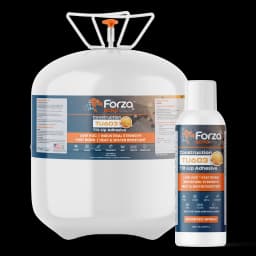 TU603 - Spray Contact AdhesiveView product →
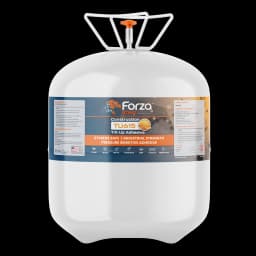 TU615 - Foam Board Pressure Sensitive Spray AdhesiveView product →
 TU-OA40 - All Weather AdhesiveView product →
 TU-OS50 - High Performance Self Leveling SealantView product →
 TU-800 - Tilt-UP Sealing TapeView product →
 Tilt-Up Adhesive RemoverView product →
Related Articles
View All articles

Recent Posts


Need Expert Advice
Our engineering team is ready to help you find the perfect adhesive solution for your application.
Contact an EngineerRecent News & Articles
Elevate Your Performance

Join Our Newsletter
Early access to new product launches and innovations
Exclusive industry insights and technical solutions
Expert tips and best practices for your applications
Follow Our LinkedIn
Stay informed with the latest industry insights & trends
Discover our latest product launches and innovations
Get expert tips and best practices for your applications